
Perimenopause can change your energy, sleep, and the way your body responds to exercise. Discover why strength training is one of the most powerful ways to support your muscles, bones, and long-term health during this stage of life.


Jill Thurman is the founder and owner of DraagKracht, a women’s strength training studio based in The Hague that focuses on pregnancy, postpartum, perimenopause and menopause. After studying psychology and working for years in the nonprofit sector, she made a deliberate career shift to dedicate her life to helping women become the strongest version of themselves, physically and emotionally.
Her own path through IVF and now into perimenopause has shaped how she coaches, making her especially attuned to the hormonal, psychosocial, and stress-related layers that sit underneath a woman’s training program. Strength, in her view, is not just about lifting heavier weights; it’s about feeling capable, taking up space, and reclaiming your body during some of the most turbulent hormonal years of life.
Medical disclaimer: The information in this article and the views shared by Jill Thurman are for general education only. Jill is not a medical doctor and does not provide medical advice, diagnosis, or treatment. Always consult your GP or specialist for personal medical questions.
When Jill talks about exercise in perimenopause, she’s clear: “There’s no right or wrong—movement is movement,” but strength training is where you get the most “bang for your buck” from limited energy and time. For many women in this phase, there is a finite amount of energy available for physical activity, on top of work, caregiving, and sleep disruptions, so the question becomes: how do you spend it wisely?
Strength training stands out because it improves metabolic health, supports disease prevention, and builds muscle mass much more effectively than doing cardio alone. Large position statements now recommend resistance training as a cornerstone for healthy aging, highlighting its impact on strength, function, and overall health in older adults (Fragala et al., 2019), and recent work in older women shows that their adaptive responses fully support current NSCA and ACSM guidelines (Cavalcante et al., 2023). As Jill puts it, muscles are “the elixir of life”—they act as glucose sinks, help the body manage energy, and support everyday tasks, all while generating more energy in the long run instead of merely draining it.
Global consensus statements on exercise for healthy longevity also place regular resistance training at the heart of extending healthspan, not just preserving it (Izquierdo et al., 2025), which reinforces Jill’s belief that strength work is non‑negotiable in midlife.
As we age, muscle mass (and, as a result, metabolism) naturally decline, whether we like it or or not. What research and Jill’s experience show is that estrogen loss in perimenopause changes muscle quality -muscle becomes more marbled with fat tissue, rather than simply shrinking the muscle itself - and changes how we distribute fat.Systematic reviews link declining estrogen with changes in female skeletal muscle quality, including greater fat infiltration and reduced contractile tissue (Critchlow et al., 2023), which makes it easier to lose strength if we don’t train.
At the same time, many women in perimenopause move less, feel more fatigued, and do fewer “hard things,” which accelerates the loss of muscle mass. By lifting weights, women can maintain the structure and quality of their muscles, which has far‑reaching effects beyond movement. A growing body of evidence suggests that resistance exercise can support brain health; for example, a recent systematic review and meta‑analysis found that strength training improves cognitive function in older adults (Wu & Huang, 2025). This adds another layer to why Jill sees strength training as non‑negotiable for long‑term health.
Bone density is another crucial pillar that strength training touches, especially as estrogen declines. Jill explains that with age and lower estrogen, bones become more “honeycomb‑ish”, the holes in that honeycomb structure get bigger, making fractures more likely and recovery far more difficult. Long‑term studies in postmenopausal women show that well‑structured resistance and impact training can slow or even partially reverse bone mineral density loss over time (Kemmler et al., 2015).
The statistics are sobering: hip fractures after age 65 are associated with higher risk of mortality, and up to half of women who fracture a hip never regain their previous independence, which is consistent with large cohort data on osteoporotic fractures and mortality risk (Bliuc et al., 2009). While genetics and hormone therapy play major roles—and Jill is clear that decisions about hormones must be made with a medical doctor—loading the bones through strength training and impact work sends a powerful signal to bone cells that they need to adapt and become stronger. She highlights that muscle, through tendons, pulls on bone with each lift—this mechanical stress tells the body, “You need to build more resilient bone tissue.”
For Jill, strength training is inseparable from mood and energy. Building muscle and moving regularly help the brain release “happy signals,” but only if training fits within what she calls a woman’s “tank”, the total stress load her body can handle. If the tank is already empty from poor sleep, high work stress, or relationship strain, adding intense training without recovery can leave women more exhausted rather than energized.
She emphasizes that everything is connected: training, nutrition, sleep, hormones, and psychosocial stressors all influence whether a workout helps or harms. Feeding the body instead of starving it, carving out real rest, and monitoring how you feel after sessions are essential to ensure strength training becomes a source of energy, not another stressor.
Jill pushes back against the idea that perimenopause requires “only” heavy lifting or “only” cardio, instead advocating for a smart balance. Many women look back to what worked in their 20s—spin classes, long runs, endless high‑intensity workouts—and try to copy-paste that into midlife, only to find their nervous system overwhelmed and cortisol stuck in a chronically high state.
Her preference, especially for the average perimenopausal woman, is to prioritize strength training two to three times per week, then add targeted cardio that the body can truly recover from. That might mean shorter, very intense sprint intervals for those whose systems can handle it, or more low‑intensity movement like walking—one of the most underestimated tools for nervous system regulation and daily cardio.
When Jill designs programs, she keeps the principles of strength training consistent across ages, but tailors the load to the realities of perimenopause. The foundation is big compound lifts that use multiple joints and muscle groups at once: squats, hinges (like deadlift), presses, and pulls.
She builds in “polarized training,” where the stress from training can be high during the session but is followed by adequate recovery, allowing cortisol to spike and then drop. Rather than endless high‑intensity classes, she leans toward brief, high‑effort intervals (for women who can tolerate them) and using progressive overloading, where load, tempo, or volume are adjusted increasingly over weeks. This aligns well with broader recommendations that emphasize appropriately dosed resistance training as a key element of healthy longevity (Izquierdo et al., 2025).
A theme that comes up repeatedly in the interview is allostatic load—not just in the gym, but in life. Jill sees many women who are overworked, under‑rested, and carrying heavy responsibilities, then trying to “fix” everything by training harder, only to end up more depleted. She uses simple checks: Are you actually getting stronger over time? Does training leave you with more energy, or does it wipe you out for the next day or longer? If workouts consistently leave women flattened, that’s a red flag that something in the program—or in the overall stress picture—needs adjusting, not a sign that they should push harder.
Jill is very aware that many perimenopausal women feel intimidated by weights and gym culture, especially if they grew up in the “skinny culture” era where strength training wasn’t encouraged. Her approach starts with education: understanding why muscle mass and bone density are non‑negotiable helps women see strength training not as a vanity project, but as a critical health habit.
She then encourages women to carve out two 20–30 minute slots per week as non‑negotiable appointments, ideally in a gym but also at home if that feels more achievable. Simple tools—a few resistance bands, 4–6 kg dumbbells—can support weeks or months of progressive training. The key is progressive overload: gradually increasing weight, reps, sets, or changing the tempo and rest so that muscles and bones keep receiving new signals to adapt.
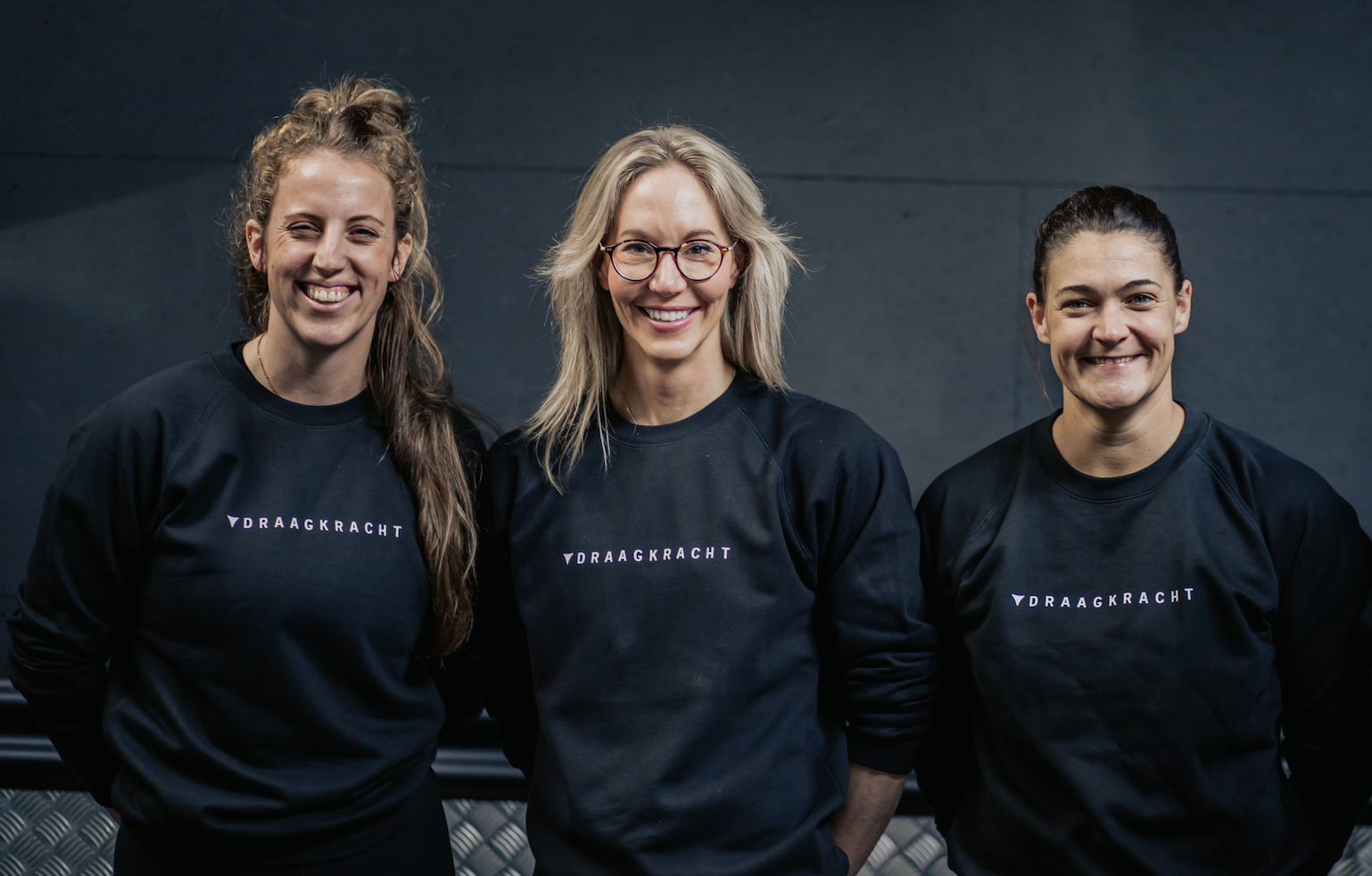
Perhaps the most powerful part of Jill’s perspective is her belief that “so much of good coaching goes beyond programming and exercise selection.” She says, “One of the most valuable things you can offer is making [women] feel heard, seen, and understood. That their experiences are real. That what they’re feeling is valid. And that they don’t have to explain or justify it.”
In her experience, many women feel defeated, weak, or incapable in perimenopause and menopause not because they are truly fragile, but because they have not been listened to—by GPs, partners, colleagues, or even themselves.
“A gym can become so much more than a place to work out. It can be a space where they feel safe to show up exactly as they are, where they can decompress, rebuild confidence, and reconnect with their bodies.”
When a coach understands these life stages, the gym becomes a place where women rediscover their strength, rather than a stage where they feel judged. Jill believes “fitness—and especially having a coach who truly understands these life stages—can play such a pivotal role in helping women feel empowered again.”
“Sometimes just knowing that someone gets it, believes them, and supports them can be just as powerful as the training itself,” she explains. She sees recognition, empathy, and understanding all of the psychosocial factors at play as “one of the most overlooked parts of coaching women through these life stages,” and argues that this emotional support can be as impactful as the sets and reps themselves.
Jill’s vision reaches far beyond her studio in The Hague. She wants to create accessible, evidence‑based online strength programs in Dutch for women in perimenopause and menopause, designed with their psychosocial realities in mind. Additionally, she also hopes to speak more with gynecologists, GP's, and other health professionals in women's health, helping them understand that walking twice a week with a weighted vest is not enough—women need real external load and structured strength training to protect their long‑term health.
Finally, she and her team aim to train other trainers in the Netherlands who “have very little knowledge of what to do with this group of women,” so that perimenopausal and menopausal clients are no longer an afterthought in fitness education. Her dream? That in 10–20 years, gyms across the country will be filled with women aged 60–80 who see strength training not as something unusual, but as simply part of who they are.
Check out DraagKracht's massive extensive free guide to training and fitness in menopause, linked here!

Bibliography & Sources
Sign up for our newsletter to be the first to get your hands on the latest on womens health in the workplace.


It’s time to create workplaces where women’s well-being isn’t just acknowledged but prioritized—because when women thrive, businesses succeed.
Join the movement
Whole Health Programs for Women and Employers
We help create healthier, more inclusive workplaces where women and businesses thrive.


.svg)